
How to Redo Your Lawn: A Complete Step-by-Step Guide
How to Redo Your Lawn:
A Complete Step-by-Step Guide
April 30, 2026
Your lawn has seen better days. Bare patches, weeds crowding out the grass, brown spots that won’t bounce back — at some point, a little patching just won’t cut it. The good news? Redoing your lawn is entirely possible, and the results are worth every bit of effort. Here’s everything you need to know to go from struggling turf to a lush, healthy lawn.
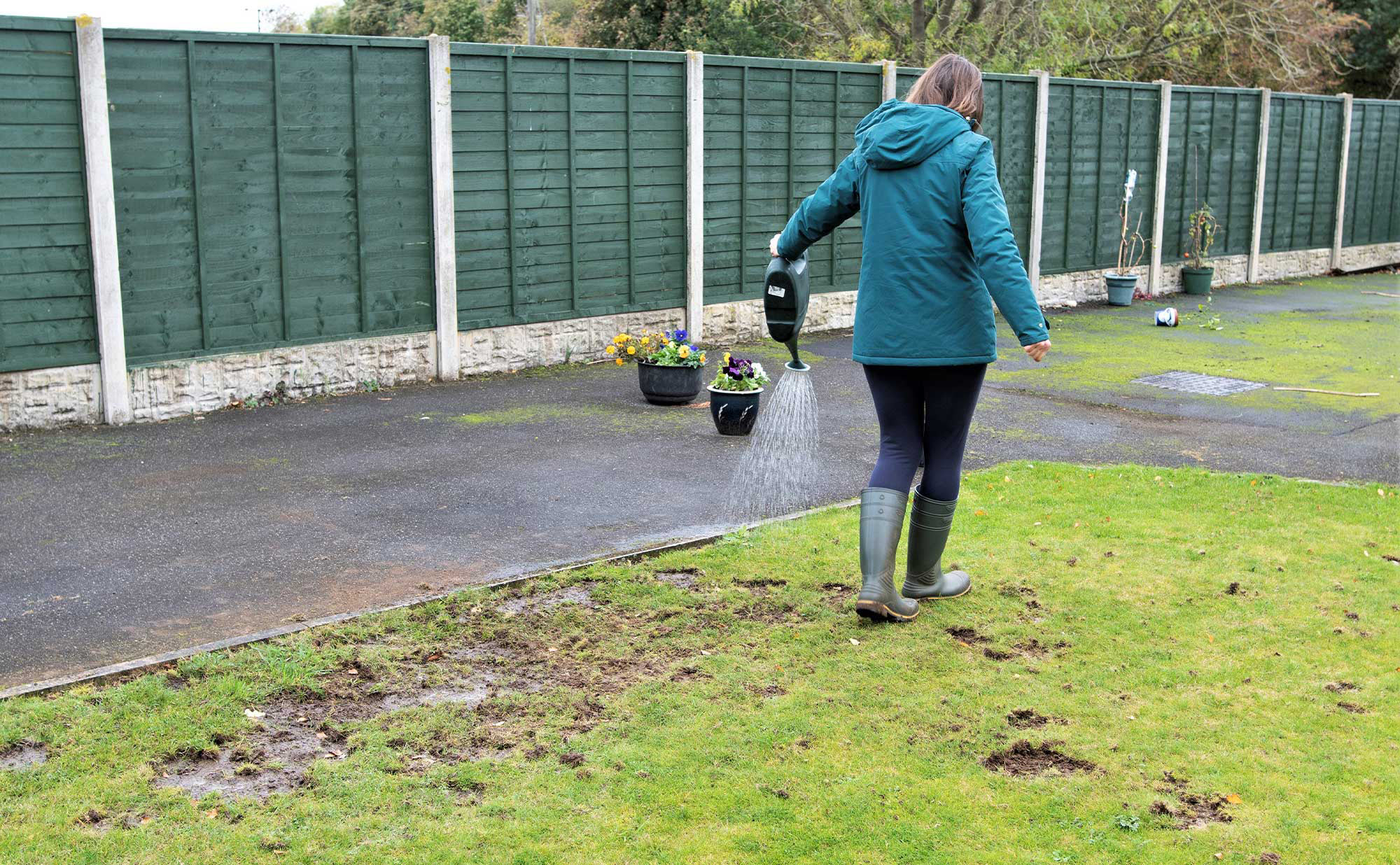
First: Do You Really Need to Start Over?
- More than half of your yard is overrun by invasive weeds or crabgrass.
- Large areas of dead or dormant grass that won’t recover.
- Serious drainage issues, soil compaction, or grade problems.
- You want to switch to a completely different grass type.
How to Redo Your Lawn
This step gets skipped all the time, and it’s a mistake. Before you do anything, get a soil test. Contact a local extension service or send a sample to a soil-testing lab. They’ll give you a report with recommendations on which fertilizers or soil treatments to add. Adding good topsoil over bad soil won’t fix the underlying problem — you need to know what you’re working with first.
Measure your lawn before buying anything. Knowing the dimensions of your lawn is essential for estimating the correct amount of grass seed and fertilizer. A simple way to measure is to walk the perimeter, counting your steps — a typical pace is about 3 feet per step. Multiply length by width to find the area of your hard, then write it down.
You have three main options for clearing out the existing grass and weeds:
Option A — Herbicide:
Apply a non-selective herbicide over the entire lawn, following the manufacturer’s recommended rates. Be careful to keep overspray off desirable shrubs and flowers. Allow 7 to 14 days for the herbicide to take effect, then spot-spray any remaining green areas. Do not mow for 72 hours before spraying, as increased leaf surface maximizes herbicide absorption.
Option B — Solarization:
Mow the grass as low as you can, soak it with a sprinkler, then cover it completely with clear plastic sheeting. Overlap the edges so grass can’t grow up between the rows, and hold the plastic down with bricks or heavy stones. The heat and moisture will destroy your existing lawn in about 6 to 8 weeks, leaving the soil ready for reseeding.
Option C — Sheet Mulching:
Cover your lawn with 7 to 10 layers of overlapping newspaper, wet it down, then add 5 to 7 inches of mulch, grass clippings, or compost on top. Without access to sunlight, the grass and weeds will wither and die in about 6 to 8 weeks — and as the newspaper and organic materials decompose, they’ll add valuable nutrients to the soil.
Once the lawn is dead, mow it one or two notches lower than normal cutting height, being careful not to scalp the ground.
Now is the best time to add any needed soil amendments or conditioners, do core aeration, level the yard, or add organic matter to enrich the soil profile. This is a step you don’t want to rush.
- Core aeration removes plugs of soil from the ground so that air, water, and nutrients can reach the roots — especially important if your lawn has experienced drought or years of heavy foot traffic.
- Tilling is often necessary to work soil conditioners into the ground. Rent a tiller and till the soil to a depth of about 5 inches with till conditioners.
- Raking and leveling ensure an even surface. After aerating, rake the area level and loosen the top 1/4 inch of soil.
Not all grass is created equal, and picking the right seed for your region and conditions is critical. Ask yourself:
- Do you need drought tolerance?
- Do you need traffic tolerance?
- Is your lawn shaded or full sun?
- Do you want better disease resistance?
Cool-season grasses like Kentucky bluegrass, ryegrass, and fescues thrive in northern climates with mild springs and falls. Warm-season grasses like Bermuda and Zoysia are better suited for southern regions. Match your seed to your climate, your soil type, and how much sun your yard gets.
Be sure to seed at the right rate — there is such a thing as over-seeding. Too many seedlings competing for space and resources will actually slow growth compared to seeding at the optimal rate.
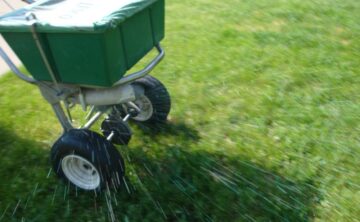
Use a drop spreader, rotary spreader, or broadcast spreader, and always spread in two directions to achieve even distribution. Once seeded, gently rake the turf so the seeds are just under the soil surface — about 1/16” to 1/8” deep. Then lightly roll or firm the soil to ensure good seed-to-soil contact, which is essential for water and nutrient uptake.
Apply a starter fertilizer on the same day as seeding to give new and established grass plants the nutrients they need to grow and flourish. Starter fertilizers are specifically formulated to support young root systems, helping them grow deeper, faster.
Six to eight weeks after planting, begin fertilizing regularly with a lawn food appropriate for your grass type to help keep it thick and green.
Proper watering is the most critical step to seeding success. After fertilizing, water lightly so the soil surface is wet. Continue watering daily, keeping the soil consistently moist so it does not harden or bake — this may require watering multiple times a day in hot weather.
In ideal conditions, you should see germination in 7 to 10 days. If you don’t see any germination by day seven, increase your watering frequency, as most instances of delayed germination are due to not keeping the seed consistently moist.
As the grass seed begins to germinate and fill in, reduce the watering frequency and increase the volume of water with each irrigation. Deep watering as the grass matures will train the roots to penetrate deep into the soil.
Prevent erosion by laying weed-free straw over the newly seeded area. Other good mulch substitutes include wood fiber materials. Once your newly seeded lawn reaches mowing height, begin mowing. Set your lawn mower to the highest setting for your grass type (usually 3–4 inches) and remove only the top 1/3 of the grass blades.

When Is the Best Time to Redo Your Lawn?
Timing matters. The preferred time for lawn renovation and overseeding is from mid-August to mid-September. Cooler temperatures, more reliable rainfall, and reduced weed competition give new grass seeds the best chance to establish before winter. Early spring is the second-best window, though an increased weed problem — particularly crabgrass — can be expected following renovation.
Maintaining Your Redone Lawn
Once your lawn is looking good, keep it that way with these habits:
Most grass thrives at 3 to 4 inches, and the best practice is to never remove more than a third of the grass blade in one mowing.
Most lawns need 1 to 1.5 inches of water per week. The roots will grow stronger if this is applied in one deep watering or divided into two waterings per week.
A regular boost of lawn nutrition will keep it green and help it grow thick enough to crowd out weeds.
Yearly core aeration prevents soil compaction and keeps your lawn breathing.

Redoing a lawn is a project that takes patience, but there’s nothing quite like watching a fresh, green lawn come in where there was once bare dirt and weeds. Follow these steps, stay consistent with your watering, and your new lawn will reward the effort for years to come.

Not a DIY Person? Let Rainbow Lawncare Handle It.
If this all sounds like a lot — it can be. A full lawn redo involves the right timing, the right products, and a fair amount of physical work. If you’d rather skip the guesswork and get it done right the first time, Rainbow Lawncare’s team of lawn restoration experts is here to help. Whether you want a professional consultation to map out a plan or you’d prefer to hand the whole project off, we’ve got you covered. Learn more about our lawn restoration services and get your lawn back on track this season.
Other items you may be interested in:
Why Is My Lawn Brown?
With the right care and a bit of patience, you can bring your brown lawn back to life and keep it resilient in the face of future droughts.
Common Lawn Issues in Minnesota
When you work so hard to maintain your lawn, you might dream of having it look perfect. In reality, even a well-maintained lawn in the
How to Fix Thin, Patchy Lawns
Frustrated by thinning grass under your trees or a patchy section on your lawn? A thin, patchy area in your Minnesota lawn can be caused
Minnesota Homeowner’s Guide to Lawn Fertilization
Fertilizing your lawn may seem like a straightforward concept, but deciding on a proper schedule of when and how much to apply can get tricky